
Top Warehouse Challenges RFID Can Solve

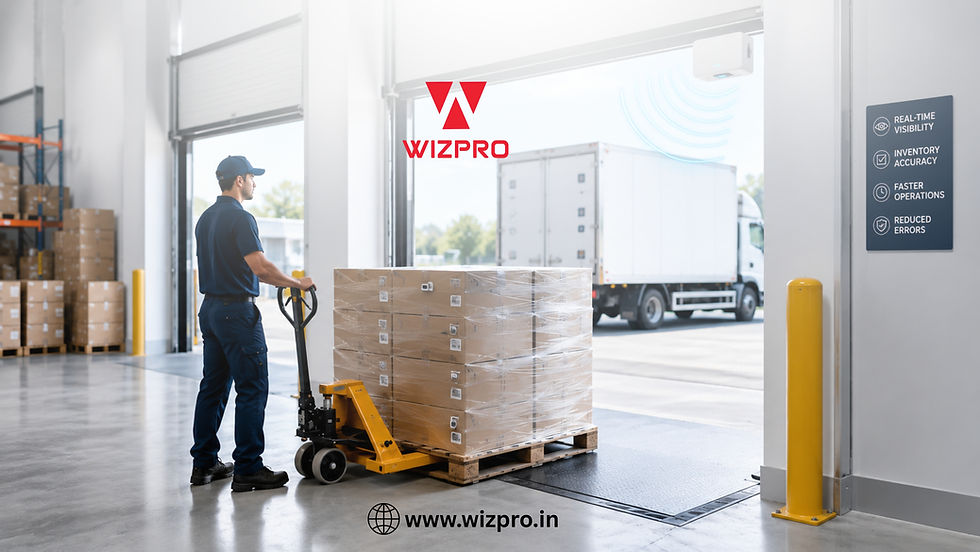
RFID (Radio Frequency Identification) solves the most persistent warehouse challenges from inaccurate inventory and slow goods movement to shipment errors and theft by enabling automatic, real-time identification of every item without manual scanning. For warehouses managing thousands of SKUs daily, RFID is not just an upgrade over barcodes; it is a fundamental shift in how inventory data is captured, verified, and acted upon.
What Is RFID in Warehouse Management?
RFID in warehouse management is the use of radio-frequency technology to automatically identify, track, and monitor inventory, assets, and personnel within a facility. Each item carries an RFID tag (a microchip and antenna). A fixed or handheld RFID reader emits radio waves that power the tag and read its unique ID without requiring line-of-sight or individual scanning.
Warehouse Challenges RFID Can Solve:
Inaccurate Inventory Counts
The problem: Manual cycle counts and barcode-based inventory checks are time-consuming, error-prone, and often produce figures that are 3–10% off actual stock. These discrepancies lead to overstocking, stockouts, and misinformed procurement decisions.
How RFID solves it: RFID enables bulk reading of hundreds of tags per second without touching or individually scanning each item. A single warehouse associate walking through an aisle with a handheld UHF RFID reader can conduct a full physical count in minutes rather than hours and with accuracy rates above 99%.
Slow & Labour-Intensive Goods Receiving
The problem: Manual barcode scanning and data entry make receiving slow, time-consuming, and prone to errors.
How RFID solves it: RFID readers automatically scan an entire pallet or carton in seconds and match items with the purchase order, flagging missing or
incorrect items instantly. This can reduce receiving time by 60–70%.
Order Picking Errors
The problem: Picking the wrong item, quantity, or variant can lead to delivery errors, customer complaints, and costly returns.
How RFID solves it: RFID verifies each picked item in real time against the
order and flags errors before packing. This ensures the right item and
quantity are picked every time.
Poor Shipment Visibility & Dispatch Errors
The problem: Without automatic verification, wrong or incomplete
shipments can leave the warehouse unnoticed, leading to returns and
customer complaints.
How RFID solves it: An RFID portal automatically verifies every tagged item
at the dispatch gate against the order and flags missing or incorrect items
before the truck leaves. This ensures the right goods and quantities are
shipped every time.
Asset Tracking & Equipment Loss
The problem: Valuable assets like forklifts, trolleys, pallet jacks, tools, and
reusable packaging can get misplaced or remain unused without proper
tracking.
How RFID solves it: RFID tags track assets automatically as they move
through the warehouse. Fixed readers record movements, giving teams real-
time visibility and reducing search time, unnecessary purchases, and asset
loss.
Inefficient Space Utilisation & Misplaced Stock
The problem: Incorrect inventory locations make products difficult to find,
causing delays, stockouts, and unnecessary reorders.
How RFID solves it: RFID tracks items at the bin level and automatically
records their location. This helps staff find stock faster, reduce misplaced
inventory, and optimise warehouse space.
Cross-Docking & Sortation Complexity
The problem: Manual sorting can cause shipment errors and delays in high-
volume cross-docking operations.
How RFID solves it: RFID automatically identifies and routes items at
receiving and sortation points, reducing manual scanning and improving
sorting speed and accuracy.
Compliance, Traceability & Audit Readiness
The problem: Manual tracking makes it difficult to maintain accurate, time- stamped records for compliance, recalls, and audits.
How RFID solves it: RFID automatically records every item movement,
creating a complete traceability trail and enabling faster audits, recalls, and
compliance reporting.
Labour Costs & Scalability Constraints
The problem: As warehouse volumes grow, manual processes require more
staff, increasing labour costs and operational complexity.
How RFID solves it: RFID automates repetitive tasks such as counting,
verification, and inventory tracking, helping warehouses increase
throughput without proportionally increasing manpower.
Benefits of RFID Warehouse Automation
The measurable operational benefits of a properly implemented RFID warehouse system include:
Inventory accuracy: Consistently achieving 99%+ accuracy versus 65–80% with manual/barcode methods, reducing write-offs, phantom stock, and emergency procurement.
Labour productivity: Receiving, cycle counting, and dispatch verification processes that previously required teams can be managed by fewer operators, freeing staff for higher-value tasks.
Throughput speed: Dock-door receiving and bulk reading capabilities dramatically increase goods movement speed, a tangible advantage during peak periods.
Visibility and control: Real-time dashboards give operations managers an accurate picture of stock levels, asset locations, and order fulfilment status at any moment from any device.
Error reduction: Automated verification at every process step reduces mispicks, wrong shipments, and data entry errors. Businesses typically report a 90–99% reduction in manual errors after RFID deployment.
ROI timeline: Well-scoped RFID warehouse deployments typically deliver return on investment within 12–24 months through a combination of labour savings, error cost reduction, and inventory carrying cost optimisation. For high-throughput operations, ROI has been achieved in as little as 6–9 months.
Audit and compliance readiness: An automatic, time-stamped audit trail reduces compliance preparation time and provides the traceability data that regulators and enterprise customers increasingly require.
Frequently Asked Questions About RFID in Warehouses -
Q) What is RFID used for in a warehouse?
RFID automatically tracks inventory, assets, and shipments without manual
scanning, providing real-time visibility.
Q) How accurate is RFID inventory management?
RFID can deliver over 99% inventory accuracy by reducing missed scans and
manual data-entry errors.
Q) What types of RFID tags are used in warehouses?
Common options include passive UHF tags for cartons and pallets, hard tags
for assets, and active tags for real-time tracking.
Q) Is RFID worth the investment for warehouses in India?
Yes. For high-volume warehouses, RFID can reduce labour costs, errors, and
inventory losses, helping deliver strong ROI.
Q) Can RFID work with an existing WMS?
Yes. RFID can be integrated with most WMS and ERP systems through APIs
or middleware.
Q) What are the limitations of RFID?
Metal and liquids can affect RFID performance. Specialised tags and proper
system design can help overcome these challenges.
Q) How does RFID improve compliance and traceability?
RFID automatically records item movements with timestamps, creating a
reliable history for audits, recalls, and traceability.
Conclusion:
RFID helps warehouses reduce manual work, improve inventory accuracy, track items in real time, and streamline operations.
From receiving and picking to dispatch and compliance, RFID makes warehouse processes faster and more reliable.
Ready to explore RFID for your warehouse?
Wizpro provides end-to-end RFID solutions, including site assessment, tag selection, system integration, and implementation support across India.
Click here to talk to a Wizpro RFID specialist now →


Comments